Your Browser Is No Longer Supported. Please use an alternative browser to improve your experience and security.



How to Store Camping Gear Between Trips
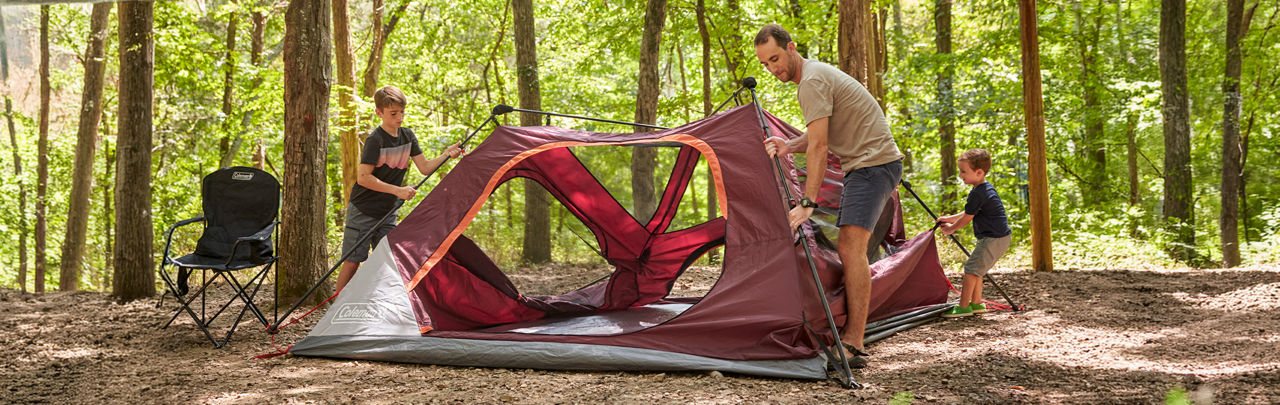
After a trip, it's tempting to throw everything in a corner of your garage or leave it sitting in your trunk to sort out later.
But how you store your gear between trips can affect how clean, organized, and ready it is the next time you go camping. A little attention now can prevent unpleasant surprises when you're packing for your next trip.
Knowing how to store camping gear properly can help protect equipment from moisture, odors, pests, and unnecessary wear. Whether you store gear in a garage, closet, basement, spare room, or apartment, the same basic principles apply.
Why Proper Camping Gear Storage Matters
After a few camping trips, it's easy for gear to accumulate more than just dirt. Crumbs on tent floors, sand in camp chairs, and forgotten food wrappers in a cooler can all create problems if they're left between trips. Without proper storage, it can lead to odors, mildew, or extra cleanup before your next outing.
Good storage habits can also help you avoid surprises when packing for your next trip. It's much more convenient to spot a broken lantern, missing tent stake, or empty fuel canister in your garage than when you're setting up camp.
Benefits of good camping gear storage include:
- Cleaner gear between trips
- Fewer moisture-related issues
- Earlier identification of repairs
- Faster trip preparation
- Better organization and accessibility
A few extra minutes when you get home can save a lot of scrambling before your next trip. The easiest place to start is with what you do immediately after unpacking.
What to Do with Camping Gear Right After a Trip
It's tempting to leave gear in your trunk until the next day, especially after a long drive home. But unpacking soon after you get home makes it easier to clean, dry, and inspect everything before it gets forgotten in the garage or closet.
Even gear that feels dry when you're packing up can still have moisture hiding in tent corners, stuff sacks, or folded fabric. Taking care of it now can help prevent problems later.
Before putting gear away:
- Shake out dirt, leaves, and debris
- Clean coolers and camp kitchen items
- Air dry tents, sleeping bags, and camp chairs
- Check for damaged or missing parts
- Recharge lights and electronic devices
- Remove batteries when appropriate for long-term storage
Once your gear is clean, dry, and inspected, the next step is deciding where it will live between trips.
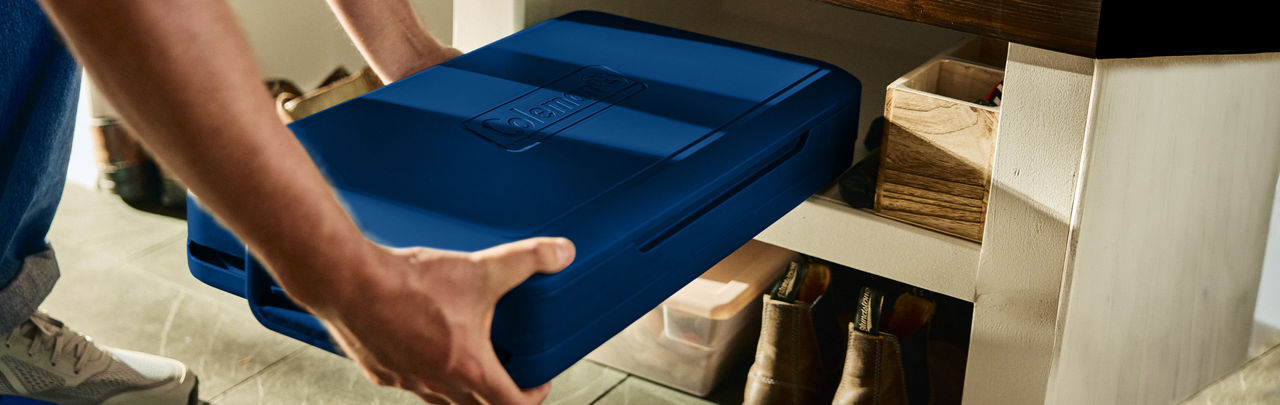
Choosing the Best Place to Store Camping Gear
If you're wondering where to store camping gear, the answer depends on your available space and storage conditions. Many campers use garages, closets, basements, or spare rooms depending on what space is available. Some dedicate shelving to their gear, while others rely on storage bins tucked into underused spaces around the home.
Because every home is different, it's usually more helpful to focus on creating a storage system that works consistently than searching for a perfect location.
When evaluating storage locations, consider:
- Available storage space
- Moisture levels throughout the year
- Air circulation and ventilation
- Accessibility when packing
- Room for larger gear items
Once you've chosen a storage location, the next challenge is keeping everything organized so you know where to find it when you need it.
How to Organize Camping Gear at Home
If you've ever gone looking for a headlamp and found yourself digging through a tote full of tent stakes, cooking utensils, and spare batteries, you might find that grouping your gear by function can make a big difference. It helps streamline packing, restocking supplies, and identifying missing items before a trip.
Once you've grouped gear by category, labeled bins, shelves, and storage containers can help keep everything separated and easy to find.
Consider using these camping gear categories:
- Shelter gear
- Sleep system gear
- Camp kitchen supplies
- Camp furniture and comfort items
- Lighting and power equipment
- Safety and repair supplies
It also makes packing faster since you can quickly see what you already have and what may need to be restocked or replaced.
How to Store Tents, Sleeping Bags, and Sleeping Pads
Your shelter and sleep system are some of the most important pieces of camping gear, and they often need extra attention before storage. Dirt and moisture can build up during a trip, so it's worth taking a few minutes to clean and dry these items before putting them away.
When storing tents, sleeping bags, and sleeping pads:
- Make sure tents, rainflies, and stakes are clean and completely dry before storage
- Store sleeping bags loosely when possible instead of keeping them compressed long term
- Follow manufacturer guidance for sleeping pad storage
- Keep sleep system gear stored in the same general area so it's easier to pack for future trips
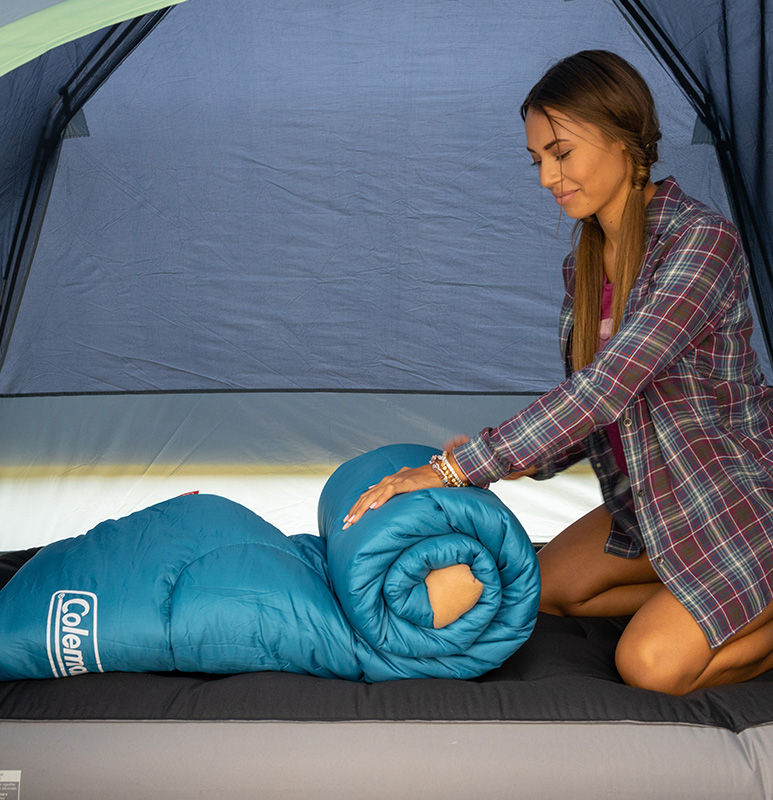
Gear that packs down efficiently often takes up less storage space at home. The Coleman® Cozy Inflatable Sleeping Pad rolls up compactly, which can help save space on a shelf, in a storage bin, or wherever you keep your camping gear.
How to Store Camp Chairs, Tables, and Shelters
Camp chairs, folding tables, and canopies are usually some of the bulkiest things in your camping gear collection. Fortunately, they are usually straightforward to store as long as they're clean and dry before being packed away.
Keeping these larger items together reduces the chances of leaving something behind when it's time to load the car. It can also make setup faster since chairs, tables, and shade structures are often used together at camp.
Before storing camp furniture and shelters:
- Remove dirt, sand, and debris
- Allow fabric surfaces to dry completely
- Store gear in carrying bags when available
- Use shelving or wall storage to save floor space
- Store larger items where they're easy to access when loading for a trip
A lot of camping gear is designed with storage in mind. The Coleman® Flex 'N Go™ 10x10 Shelter includes a wheeled carry bag, while Flex 'N Go™ chairs fold down compactly for storage. The Pack-Away® 4-In-1 Table stores in a self-contained case that helps keep it protected between trips.
How to Store Coolers, Camp Stoves, and Camp Kitchen Gear
Camp kitchen gear is often the last thing anyone wants to clean after a trip. But coolers, cookware, and grills often need a little more attention before storage because they come into contact with food, grease, and moisture during a trip.
Food residue can attract pests, while trapped moisture can create odors that are difficult to remove before your next outing.
A dedicated camp kitchen storage area can make packing easier while helping keep cooking equipment organized and ready to use.
Before storing coolers, grills, and cooking gear, check the product’s use and care instructions for any specific cleaning, drying, fuel-handling, or storage requirements. General steps may include:
- Emptying coolers completely
- Washing food-contact surfaces thoroughly
- Allowing coolers to dry before closing lids
- Cleaning cooking grates and grease trays
- Storing utensils and cookware together
Some products are designed to simplify storage and cleanup. The Snap 'N Go™ 55-Quart Collapsible Hard Cooler includes a removable liner that can make post-trip cleanup easier, while its collapsible design helps reduce the amount of storage space it requires. Portable grills like the RoadTrip® 285 Portable Stand-Up Propane Grill have removable grease-management components that can be cleaned before storage and fold down when not in use.
Camping Gear Storage Ideas for Small Spaces
Not everyone has a garage or dedicated gear room. In many homes, camping gear has to fit alongside everyday household storage, which makes organization especially important.
The key is making the most of the space you have by using closets, shelving, and other underused storage areas.
If storage space is limited, consider:
- Under-bed storage containers
- Closet shelving systems
- Stackable storage bins
- Vertical wall shelving
- Storage benches, ottomans, or other furniture with built-in storage
- Rotating seasonal gear to less accessible areas
Compact gear can also make storage easier. Products like the coolers in the Snap 'N Go™ collection are designed to take up less space when not in use, making them practical for apartments and smaller storage areas.
Common Camping Gear Storage Mistakes to Avoid
Many outdoor gear storage problems start with simple oversights that happen after a trip. Avoiding these mistakes can help keep equipment in better condition and reduce surprises before your next trip.
Most issues are easy to prevent with a consistent post-trip routine and occasional gear inspections.
Watch out for these common mistakes:
- Storing gear while it's still damp
- Leaving equipment in a vehicle for extended periods
- Compressing sleeping bags long term
- Ignoring small repairs
- Forgetting to label storage bins
- Storing gear where pests are common
Most of these mistakes are easy to avoid when storage becomes part of your regular post-trip routine.
How to Keep Camping Gear Ready for Your Next Trip
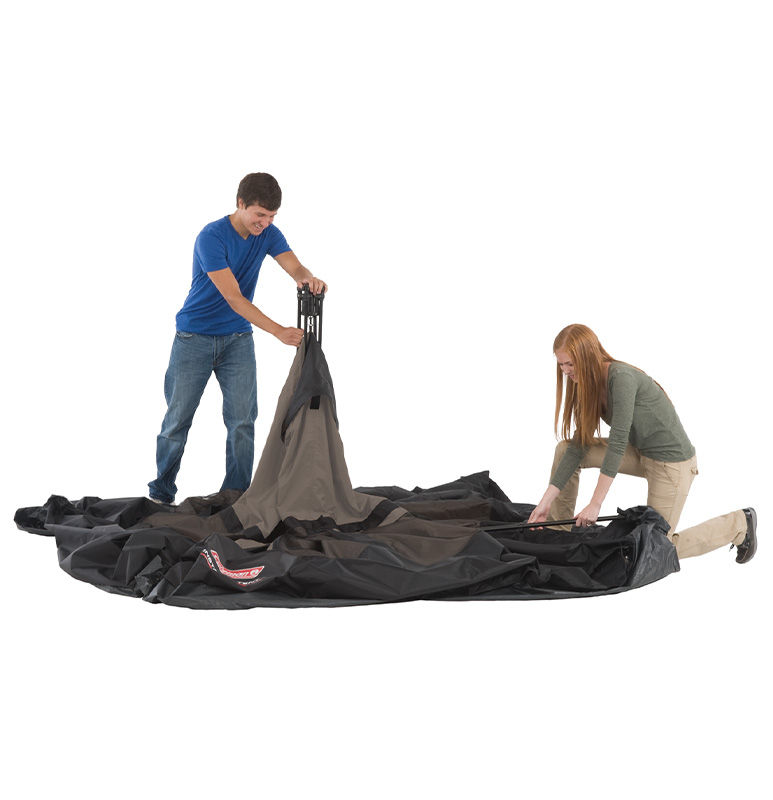
Good storage habits don't just protect gear. They also make future trip planning easier by reducing the amount of last-minute preparation before you leave.
Instead of starting from scratch every time you pack, you'll already know where your gear is, what condition it's in, and what needs attention before your next trip.
To keep gear ready:
- Maintain an essentials bin
- Restock consumable supplies after each outing
- Recharge lights and power devices
- Keep packing lists with your gear
- Perform quick inspections before storage
A little preparation after each trip can make the next one easier to plan and pack for.
Frequently Asked Questions About Camping Gear Storage
Can camping gear be stored in a garage?
Yes, as long as the area stays reasonably dry and protected from persistent moisture. Shelving, labeled bins, and regular inspections can help keep gear protected between trips.
What items should not be stored in a sealed container long term?
Some gear, such as sleeping bags, may benefit from more breathable storage because long-term compression or limited airflow can affect how it performs over time. Always follow the manufacturer's storage recommendations for specific products.
Is it better to roll or fold a tent for storage?
Either method can work. Many campers choose to vary how they pack their tent rather than folding it along the exact same lines every time, which can help avoid repeatedly stressing the same creases in the fabric.
How often should you inspect camping gear during the off-season?
A quick inspection once or twice during long storage periods can help you spot moisture, pests, missing parts, or needed repairs before your next trip.
How do you keep camping gear from smelling musty?
Make sure gear is completely dry before putting it away and keep it in a clean location with reasonable airflow.
Should you keep camping gear packed and ready to go?
Keeping an essentials bin packed can simplify trip preparation, but larger gear should still be stored according to manufacturer recommendations.
What is the best way to store camping gear?
The best way to store camping gear is to clean and dry it after every trip, then keep it organized in a dry location where it's easy to access when you're ready to camp again.