Your Browser Is No Longer Supported. Please use an alternative browser to improve your experience and security.


How to Build Your First Camp Kitchen
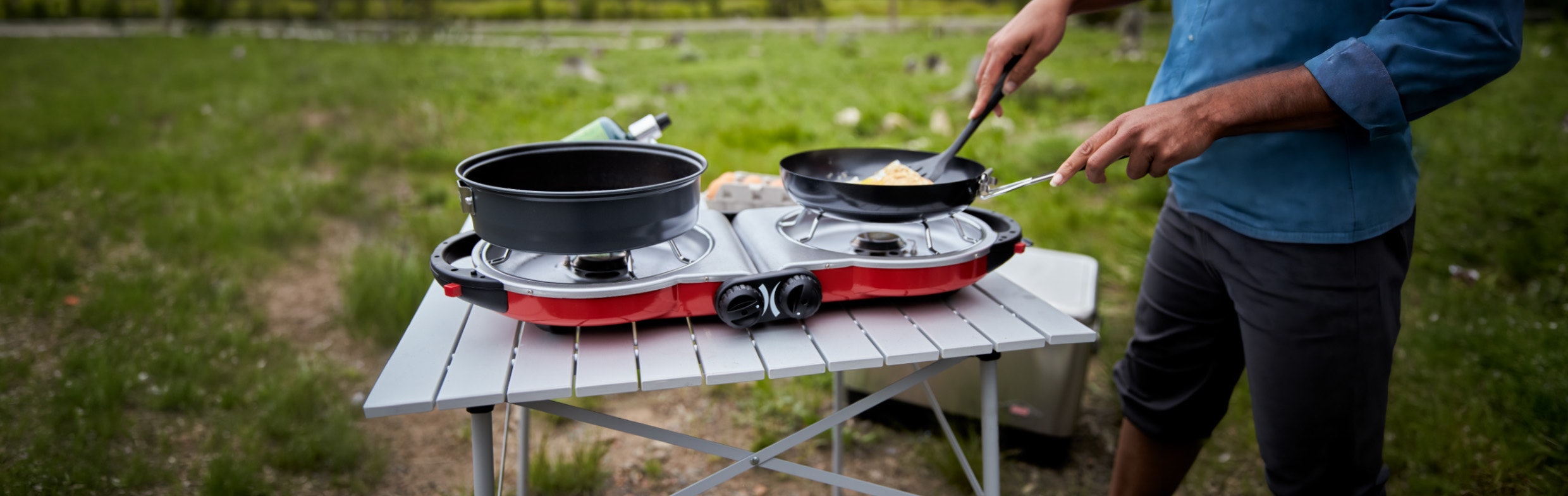
Camp cooking is part of the adventure. With a simple camp kitchen setup, you can fire up tasty meals outside, keep everything organized, and make cleanup easy on yourself. Whether this is your first camping trip or you’re ready to move beyond trail mix and sandwiches, building up your camp kitchen helps make mealtime one of the highlights of being outside with your crew.
At its core, a camp kitchen is just a system for cooking, prepping, storing, and cleaning dishes outdoors. It doesn’t need to be complicated or expensive. With a few camp cooking essentials and a little bit of planning, you can build a kit that works for your crew and grows with you over time. .
Why Building a Camp Kitchen Makes Camp Cooking So Much Easier
A camp kitchen brings a sense of order to cooking outside. Instead of digging through bins or piling ingredients on a picnic table, everything has its place. Organization makes cooking faster and less stressful.
Having a basic setup also helps with food safety and cleanup. Keeping raw food, cookware, and dishes organized reduces mess and makes it easier to clean up after meals—a great job for kids! Even a simple camp kitchen can make a big difference in smoothing out campsite mealtimes.
Camp Kitchen Essentials
When building your first camp kitchen, start with the basics. Use some things you already have at home to keep it simple and affordable.
Basic camp kitchen essentials include:
- A camp stove or grill
- Cookware like pots, pans, or a compact camping cookware set
- Cooking utensils such as a spatula, tongs, and spoon
- Plates, cups, and eating utensils
- A cooler for storing perishable food
- Biodegradable dish soap, a sponge, and trash bags
If you’re wondering what to bring to camp or what should be on your must-have list, this checklist is a solid place to begin. You can always add more later as you dial in your routine.
Metal utensils and plates won’t break and make for easy cleaning. Or a stack of paper plates can turn into fuel for your campfire after the meal.
Choosing the Right Camp Stove
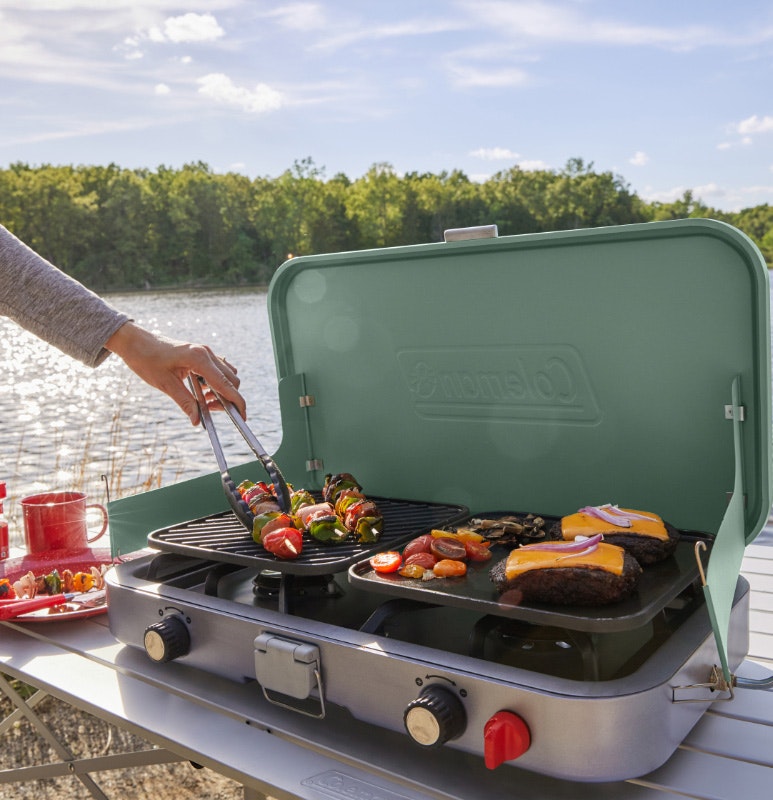
Your stove is the centerpiece of most camp kitchens. A camp stove gives you a reliable way to cook meals, boil water, and make coffee in the morning.
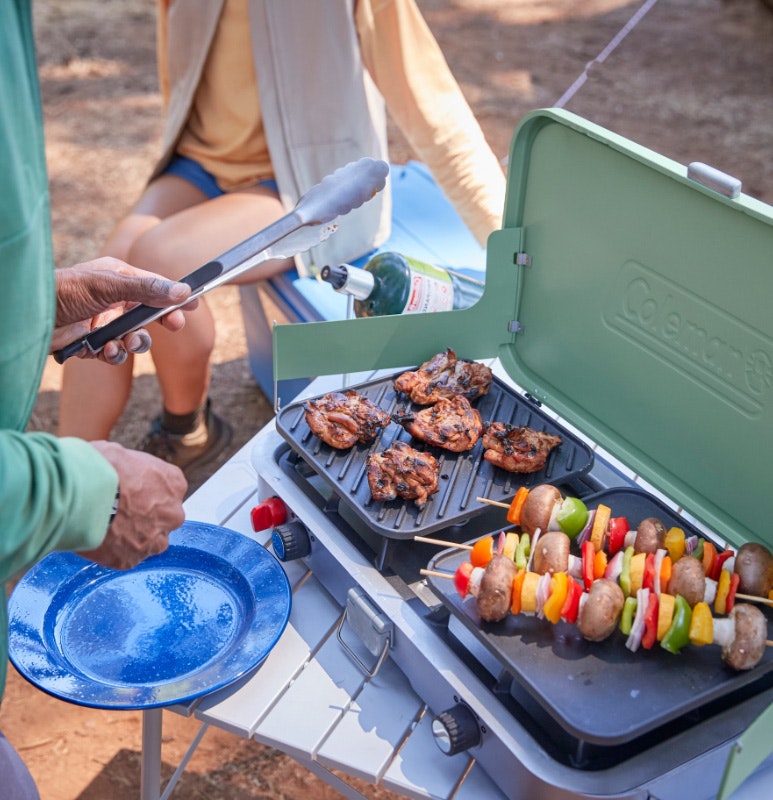
Some campers like to go full gourmet and fire up a wide variety of meals. A stove like the Cascade™ 3-in-1 Camping Stove works well for people who want the option to grill, cook on a griddle, or use pots and pans.
Others prefer to keep it simple. The Fold N Go™ Propane Stove fits easily into a compact camp kitchen and can still handle lots of everyday meals. When you choose a camp stove, think about how many people you’re cooking for and the kinds of meals you want to make.
Camp Kitchen Storage and Food Management
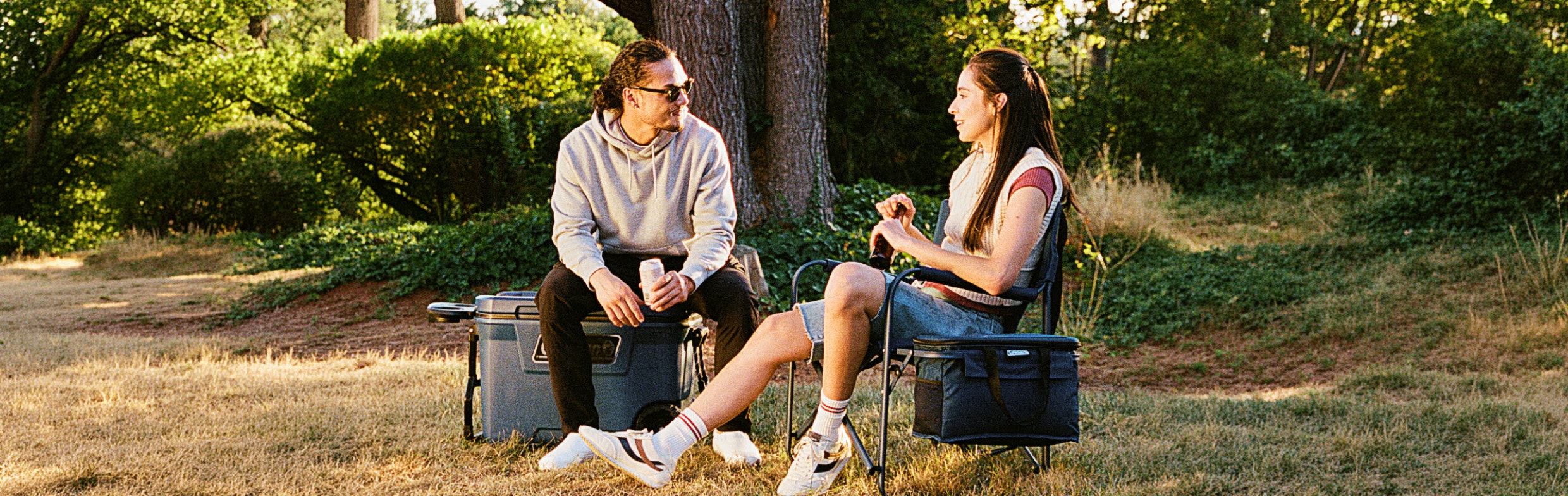
Food storage is a big part of camp cooking. Knowing how to store food while camping helps keep meals fresh and safe.
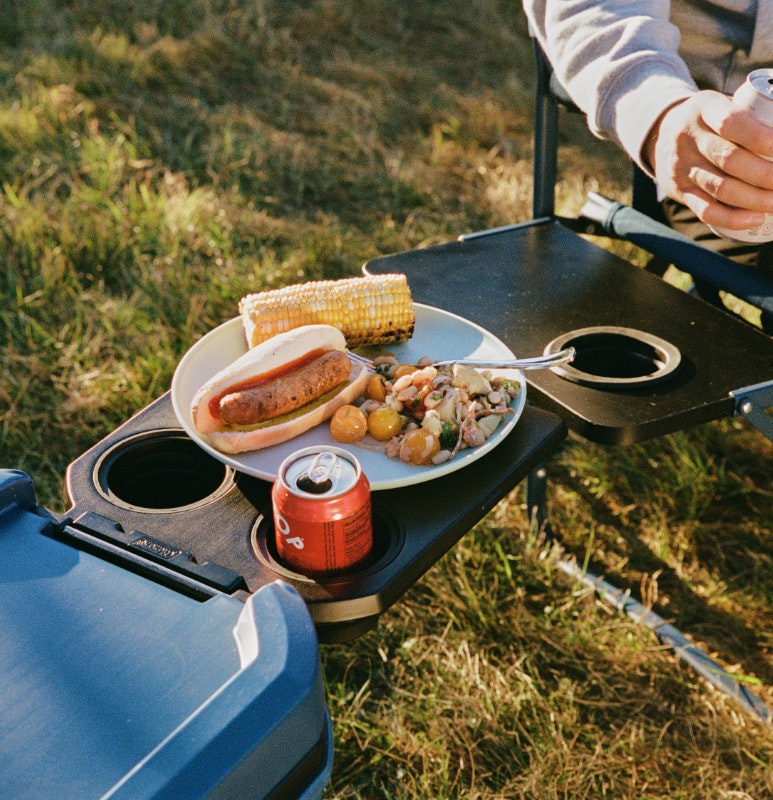
Coolers are the heroes of camp kitchen storage. Some also help with organization at camp. A design like the Flex ‘N Go™ Cooler, with built-in side tables, can even give you extra surface space for setting items down without needing another table.
A few simple camp kitchen organization ideas can make a big difference:
- Group and pack food by meal or by day
- Use bins to separate dry food, cookware, and utensils
- Keep cleaning supplies together so they’re easy to grab
Simple systems help organize your camp cooking.
Setting Up Your Camp Kitchen
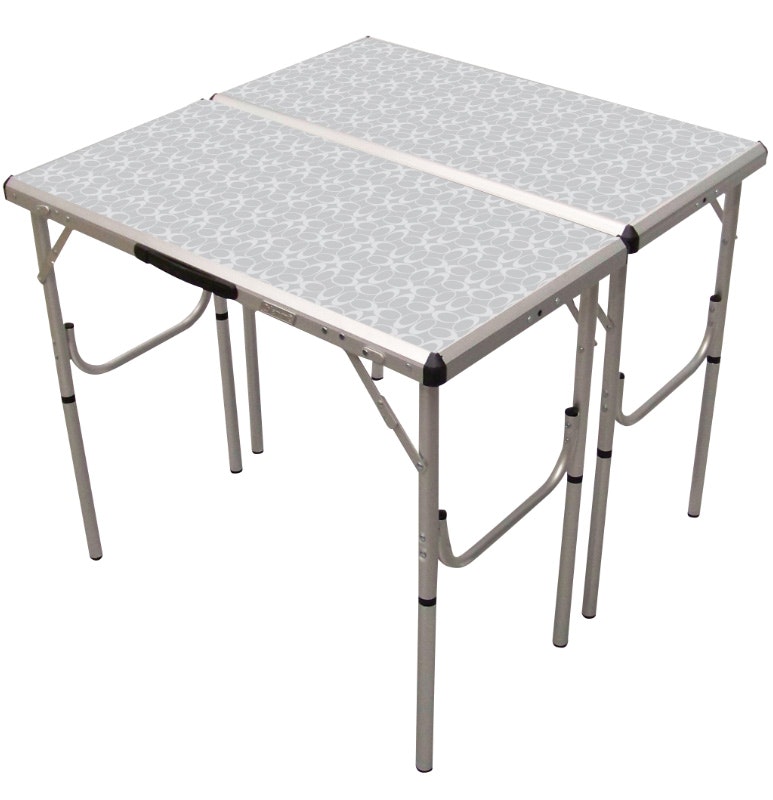
Once you arrive at camp and pitch your tents and arrange the folding chairs around the firepit, it’s time to set up your kitchen. Ideally, you have a flat area with some shade and airflow. Most campsites have a picnic table. If your site doesn’t have one, use a portable table. Versatile options like the Pack-Away® 4-in-1 Table can adapt to food prep, serving, or cleanup depending on how you arrange it.
Morning routines matter, too. If you plan on brewing coffee for the whole crew, get a stovetop setup like the 12-Cup Stainless Steel Percolator and get it ready to go for your stove or grill before you go to bed for the night.
Camp Kitchen Cleanup and Leave No Trace Basics
Cleanup is easier when you plan for it. Knowing how to wash dishes while camping helps keep your campsite tidy and reduces your impact on the environment.
A simple dishwashing setup usually includes:
- A wash bin with warm, soapy water and biodegradable dish soap
- A rinse bin with clean water
- A towel or drying area
Dispose of gray water according to campsite guidelines and follow Leave No Trace principles. Cleaning as you go and storing food securely helps protect wildlife, too.
Optional Add-Ons to Upgrade Your Camp Kitchen
Once you have the basics, you can start to add extras to dial in your setup. Optional camp kitchen add-ons include:
- A portable grill for group meals, such as the RoadTrip® X-Cursion Portable Grill
- A collapsible sink for washing dishes
- Extra bins for food and cookware
Pro tip: Add items slowly and only when they serve a clear purpose in your setup.
Building a Camp Kitchen That Grows With You
Your first camp kitchen won’t be perfect. It’s something you build over time as you learn what works best for you.
As your camping trips change, your camp kitchen can change with them. With a simple system and dependable gear, camp cooking gets easier every time. The goal is just to enjoy some good food, good company, and time outside.
Frequently Asked Questions About Camp Cooking and Camp Kitchens
Do you need a camp kitchen to cook while camping?
No. You can cook with just a stove or campfire, but a camp kitchen helps keep cooking organized and easier to manage, especially for longer trips or beginners.
What is the easiest camp kitchen setup for beginners?
A basic setup includes a camp stove, simple cookware, a cooler, and a small bin for utensils and cleanup supplies.
Can you cook at camp without electricity?
For sure! Most camp kitchens rely on propane-powered camp stoves, grills, or campfires rather than electricity.
How do you keep a camp kitchen organized on longer trips?
Organize food and gear by meal or by day, label it, and keep frequently used items at the top.